
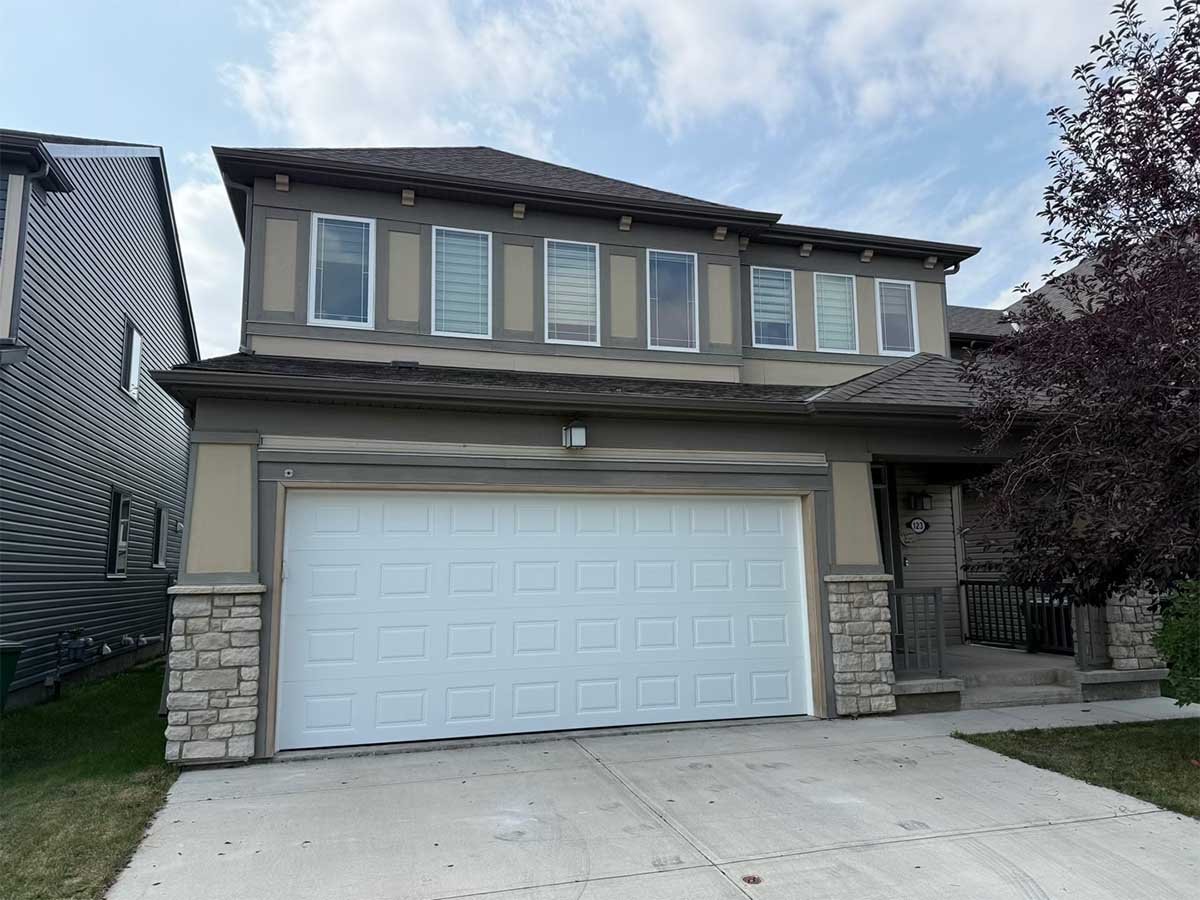
Is a Garage Door Tune-Up Worth It? Calgary Maintenance Pricing Explained
A garage door tune-up in Calgary starts from $149. It covers a full inspection, spring tension check and balance, lubrication of all moving parts, hardware tightening, opener force and travel limit adjustment, and a safety reverse test.
Whether it is worth it comes down to one thing: the tune-up is not really maintenance, it is early detection. The lubrication is nice. The value is a technician spotting a fraying cable or a stretched spring while you can still book the repair for a convenient day, rather than finding out at 6am on a Tuesday when you need to get to work. Regular tune-ups also help your opener last longer, and a well-matched garage door opener puts less strain on the whole system to begin with.
What is actually done
A proper tune-up is about 45 minutes to an hour of work.
Spring tension and door balance: We disconnect the opener and lift the door by hand to the halfway point. A properly balanced door stays where you put it. If it drifts down, the springs have lost tension. If it pulls up, they are over-tensioned. Either way the opener is doing work it should not be doing, which shortens its life. We adjust.
Cable inspection: Both cables, along their full length, looking for fraying, rust at the bottom bracket, and correct seating on the drums. This is the single most valuable item on the list, because a cable caught while fraying from $199 repair, and a cable caught after it snaps is often from $199 repair plus a door that is off track.
Roller and hinge check: Worn rollers, loose hinges, bearing play. Steel rollers with exposed bearings are the usual culprit for noise.
Hardware tightening: A garage door goes through thousands of cycles a year and every one of them vibrates the fasteners. Bolts on the hinges, brackets and track work loose. This is genuinely worth doing and almost nobody does it themselves.
Track inspection and alignment: Checking for bends, debris and correct clearance.
Lubrication: Rollers, hinges, bearings, springs and the opener rail, with a proper garage door lubricant.
Opener force and travel limits: Recalibrated so the door closes fully without reversing and stops in the right place.
Safety reverse test: Both the photo eye sensors and the contact reverse. We place an obstruction and confirm the door reverses on contact. If your door does not reverse when it hits something, that is the most important thing we will find all year.
Weather seal check: Bottom seal and jamb seals, for gaps, cracks and compression.
How often, in Calgary specifically
Once a year for most homes. A door doing three or four cycles a day, on a detached or unheated garage, is fine annually. Best timing is early autumn, before the cold arrives, because most winter failures are things that were already marginal in September.
Twice a year if the door is your main entrance. Two drivers coming and going puts a door at eight or ten cycles a day. That triples the wear rate. Spring and autumn works well.
Twice a year on commercial doors. Cycle counts on a shop or warehouse door are in a different league.
Immediately, regardless of schedule, if: the door is noisier than it was, it moves unevenly, it hesitates, the opener strains, or it feels heavy when you lift it by hand.
The autumn timing matters more here than it does in a milder city. Calgary doors fail disproportionately in the first hard cold snap, because cold reveals every marginal component at once. Thickened lubricant, stiffened bearings and contracted metal all land on a system that was already borderline. A September tune-up catches those before the January call-out.
Does it actually save money? An honest answer
Here is the case for, without overselling it.
What it reliably prevents: cables snapping without warning, springs failing early because the door was unbalanced and one spring was carrying more than its share, opener burnout from pulling a badly balanced door for years, and rollers destroying themselves and then the track.
What it does not prevent: springs reaching the end of their cycle life. Nothing prevents that. A spring rated at 10,000 cycles will reach 10,000 cycles whether you lubricate it or not. Maintenance tells you when it is close. It does not extend the number.
A tune-up will not make your door last forever. What it does is convert unplanned failures into planned repairs, and it catches the cheap problems before they become expensive ones.
If the door is under five years old and running silently, you can stretch the interval. Past five years, or on any door that has started making noise, annual service earns its money.
What you can do yourself between visits
None of this is difficult and all of it helps.
Lubricate every six months. Use a proper garage door lubricant, silicone or lithium based. Rollers, hinges, bearing plates, springs and the opener rail.
Do not use WD-40 on the door. This is the most common mistake we see. WD-40 is a solvent and a water displacer. It strips existing lubricant and leaves the part drier than it was. It has a place for freeing a seized bolt. It is not a garage door lubricant.
Test the safety reverse monthly. Put a length of two by four flat on the floor under the door and close it. The door should touch, stop and reverse. If it does not, stop using the automatic close until it is fixed.
Wave your arm through the sensor beam while the door is closing. It should reverse.
Listen. You know what your door sounds like. New grinding, banging, squealing or a rattle that was not there last month is worth a phone call.
Keep the bottom track clear. Gravel, ice and road salt build up in the tracks over a Calgary winter and grind the rollers.
Squeegee out standing meltwater near the bottom brackets in winter. Salt water sitting against the cable termination is the fastest way to corrode a cable in this city.
Full detail: Best garage door lubricant for minus 30: what not to use
Frequently asked questions
How long does a tune-up take?
About 45 minutes to an hour.
Will you try to sell me repairs I do not need?
We will tell you what we find, what it costs, and how urgent it is. Plenty of tune-ups end with nothing to report beyond a note that the springs have a couple of years left. If your door is fine, we will say so.
What if the door needs a repair during the visit?
We will price it before doing anything. Most common repairs from $199, spring replacement from $349, opener repair from $249.
Do I need a tune-up on a brand new door?
Not in the first year. The manufacturer warranty covers defects, and a new door is properly balanced. Start the annual cycle from year two.
Do you service commercial doors?
Yes, and we can set up a scheduled maintenance arrangement rather than one-off visits, which suits businesses that cannot afford downtime.
Is price before or after tax?
Before. Add GST at 5% for any job.
Book a tune-up
Garage Door Tune-Up from $149. Call 587 223 5757 or request a quote for no obligation quote.
