
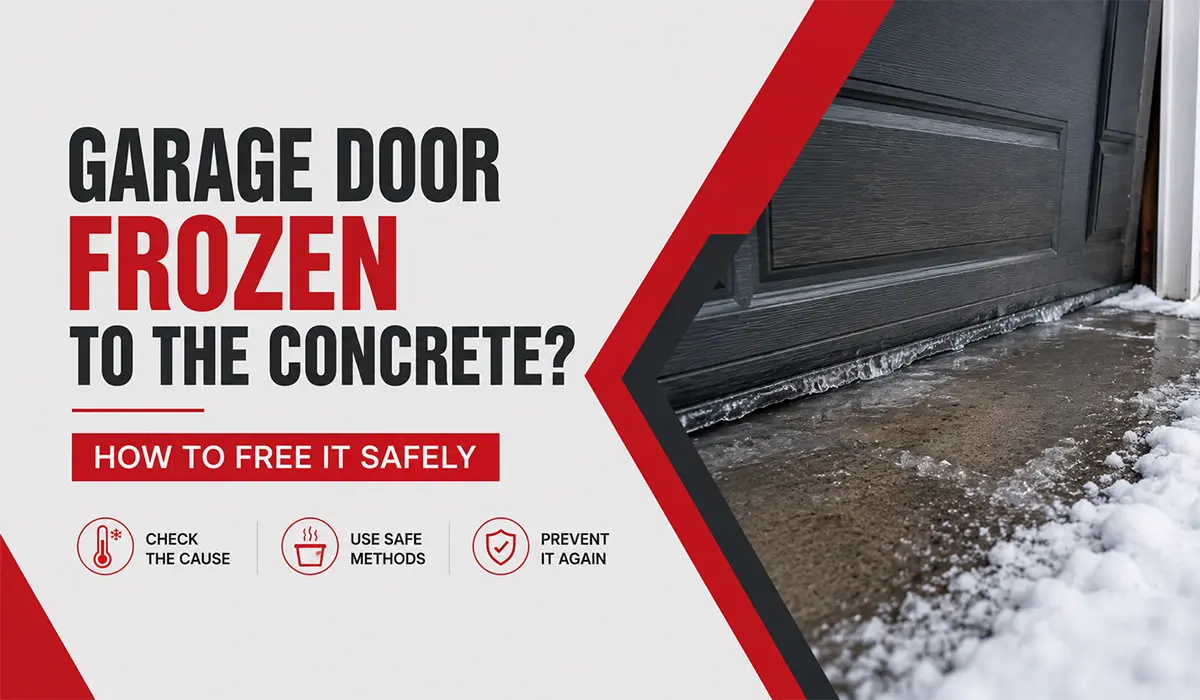
Garage Door Frozen to the Concrete? How to Free It Safely
Garage Door Frozen to the Concrete: How to Free It Without Damage
A garage door frozen to the concrete is one of the most common winter problems in Calgary, and one of the easiest to make worse. The rubber seal along the bottom of the door bonds to the slab when meltwater freezes overnight, and in the morning the door will not budge. If you force it with the opener, something has to give, and it is usually the seal, a cable or the bottom bracket. Here is how the ice forms, how to free the door safely, and how to stop it happening again.
Why it happens here specifically
The cycle is simple. Snow packs onto your vehicle while you are out. You park in the garage, the snow melts off, and the water runs to the lowest point, which is the base of the garage door. Overnight the temperature drops, the water freezes, and the rubber bottom seal is locked into the ice. A Chinook makes it worse, because a warm afternoon melts everything and the temperature crashing back down overnight refreezes it into a solid bond. An old or cracked bottom seal freezes down faster and harder, because water works into the splits and freezes there too.
How to free the door without breaking anything
The opener will strain against the ice and either burn out, snap a cable, or tear the seal clean off. If the door does not move on the first normal press, stop and free it by hand.
Try these in order
- Break the bond by hand first. Pull the red release cord to disconnect the opener. Push down firmly on the door or tap along the bottom edge to crack the ice bond, then try lifting by hand.
- Use warm, not boiling, water. Pour warm water along the bottom seal where it meets the concrete. Boiling water can crack cold concrete and refreezes faster, so keep it warm.
- A hair dryer or heat gun on low. Work along the seal to melt the bond, keeping it moving so you do not overheat one spot on the rubber.
- A flat plastic tool to lever gently. A plastic scraper can break the ice line. Never use a metal blade hard against the seal, as it will slice the rubber.
Once the door is free, run it up and down a couple of times to clear the seal, and wipe away the standing water so it does not refreeze the next night.
What not to do
- Do not force the opener. It is the fastest way to turn a frozen door into a repair bill.
- Do not use boiling water on the concrete or the seal.
- Do not chip at the ice with a metal chisel or screwdriver against the rubber seal.
- Do not pour salt against the seal and hardware. It frees the ice but accelerates rust on the cables, brackets and fasteners, which is a bigger problem later.
If the door already came off track or a cable snapped
Some people find this article after forcing the door. If it is now crooked, hanging unevenly, or you can see a loose cable, stop using it. Forcing a frozen door commonly snaps a cable or pulls the door off track, and running the opener again risks bending track sections and damaging panels. Disconnect the opener, leave the door where it is, and call for a repair. Catching it before further damage keeps the fix small.
How to stop it happening again
- Replace a worn bottom seal before winter. A fresh, flexible seal bonds to ice far less than a cracked, hardened one.
- Squeegee out meltwater. Push the water from under the car out of the garage before it reaches the door and freezes overnight. This is the single most effective habit.
- Apply a thin coat of silicone to the seal. A silicone based spray on the bottom seal helps stop it sticking. Reapply through the winter.
- Improve drainage if water always pools. If the slab slopes back toward the door, a threshold seal glued to the floor can hold water out and give the door something better to seal against.
- Keep an attached garage a little warmer. Even a few degrees above freezing stops the overnight bond forming. Good weatherstripping and an insulated door make that affordable.
None of this is complicated, and most of it costs very little compared with a January call-out for a snapped cable. A quick fall check of your bottom seal and a squeegee by the door will get most Calgary homeowners through the winter without ever seeing the door freeze down.
Frequently asked questions
Why is my garage door frozen shut?
Meltwater from your vehicle runs to the base of the door and freezes overnight, bonding the rubber bottom seal to the concrete. A worn seal freezes down faster because water works into the cracks.
Can I pour hot water to free it?
Use warm water, not boiling. Boiling water can crack cold concrete and refreezes quickly, which can make the problem worse.
Is it safe to force it open with the opener?
No. Forcing the opener against the ice can burn out the motor, snap a cable or tear off the seal. Break the ice bond by hand first.
How do I stop my door freezing to the ground?
Squeegee out meltwater before it freezes, replace a worn bottom seal, apply a silicone coating to the seal, and keep an attached garage a few degrees above freezing.
Should I use salt to melt the ice?
Avoid putting salt directly against the door. It frees the ice but corrodes the cables, brackets and fasteners, leading to bigger repairs later.
My door came off track after I forced it. What now?
Stop using it and disconnect the opener. Running it again can bend the track and damage panels. Call for a repair while the damage is still limited.
Seal worn out, or door damaged from forcing it free?
We replace bottom seals and cables and get frozen doors moving safely again across Calgary and the surrounding towns. Call 587 223 5757 or request a quote online.
